
Masonry Has Already Changed. Most Specifiers Just Haven't Caught Up
Masonry stopped being a slow, structural, labour-heavy trade decades ago; here's what modern masonry actually means for architects and engineers specifying a brick facade today.
Say "masonry" to most architects or engineers and they picture the same thing: a bricklayer on a scaffold, one course at a time, at the mercy of the weather and the program. That picture is decades out of date. It's also costing good designs good outcomes, because specifiers are still designing around constraints that masonry doesn't actually have anymore.
Here's the real problem: brick facades get value-engineered out, simplified, or dropped entirely, not because the look is wrong for the building, but because everyone in the room assumes brick means slow, risky, and expensive. That assumption is built on how masonry used to be delivered, not on what it is.
Masonry stopped being structural a long time ago
For most of its history brickwork was structural: two skins of brick doing real work, holding the building up. That's not how brick has been built in Australia for the last few decades. Standard construction here is timber or steel frame with a brick veneer in front of it. The brick isn't holding anything up. It's cladding.
That matters, because once you accept that brick is already cladding, the question stops being "should we use real brick" and starts being "how do we want this cladding delivered." We're not trying to replace bricklaying or talk anyone out of the material. We're saying the delivery method is the part that's changed, not the brick itself.
The brick isn't the bottleneck. The process is
Traditional brickwork is a production line built on site, exposed to every variable a construction site has: weather, access, sequencing, how many other trades are fighting for the same scaffold. You can't fix a slow brickwork program by throwing more people at it. More hands on a wall don't make the mortar cure faster or the rain stop.
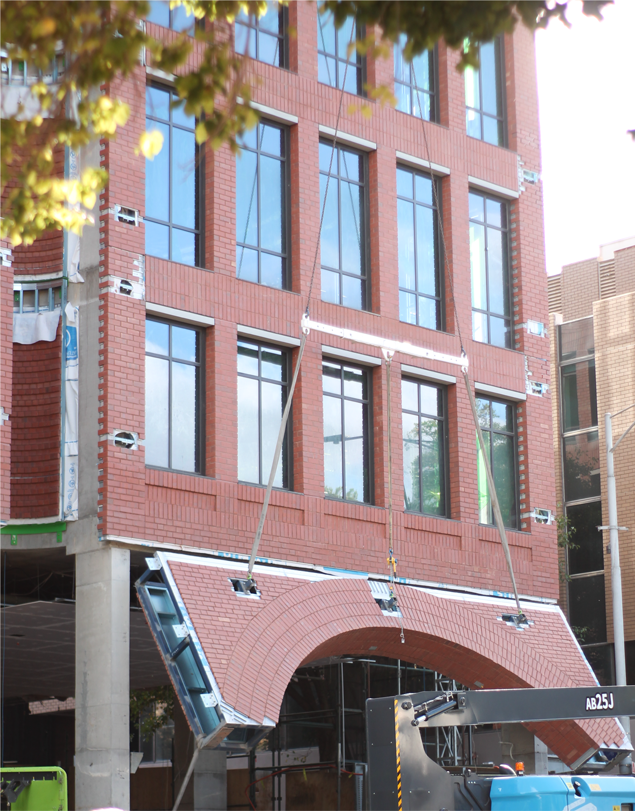
Modular masonry takes the same brick and moves the production line off the site and into a controlled process. The brick gets cut and processed into facings off site, then installed as panels on a rail system. That's the whole shift: not a different material, a different place and order in which the work happens. Crews can work top-down, out of sequence, with far less scaffolding and far less material sitting around waiting to be laid.
It's still a real brick, cut and processed
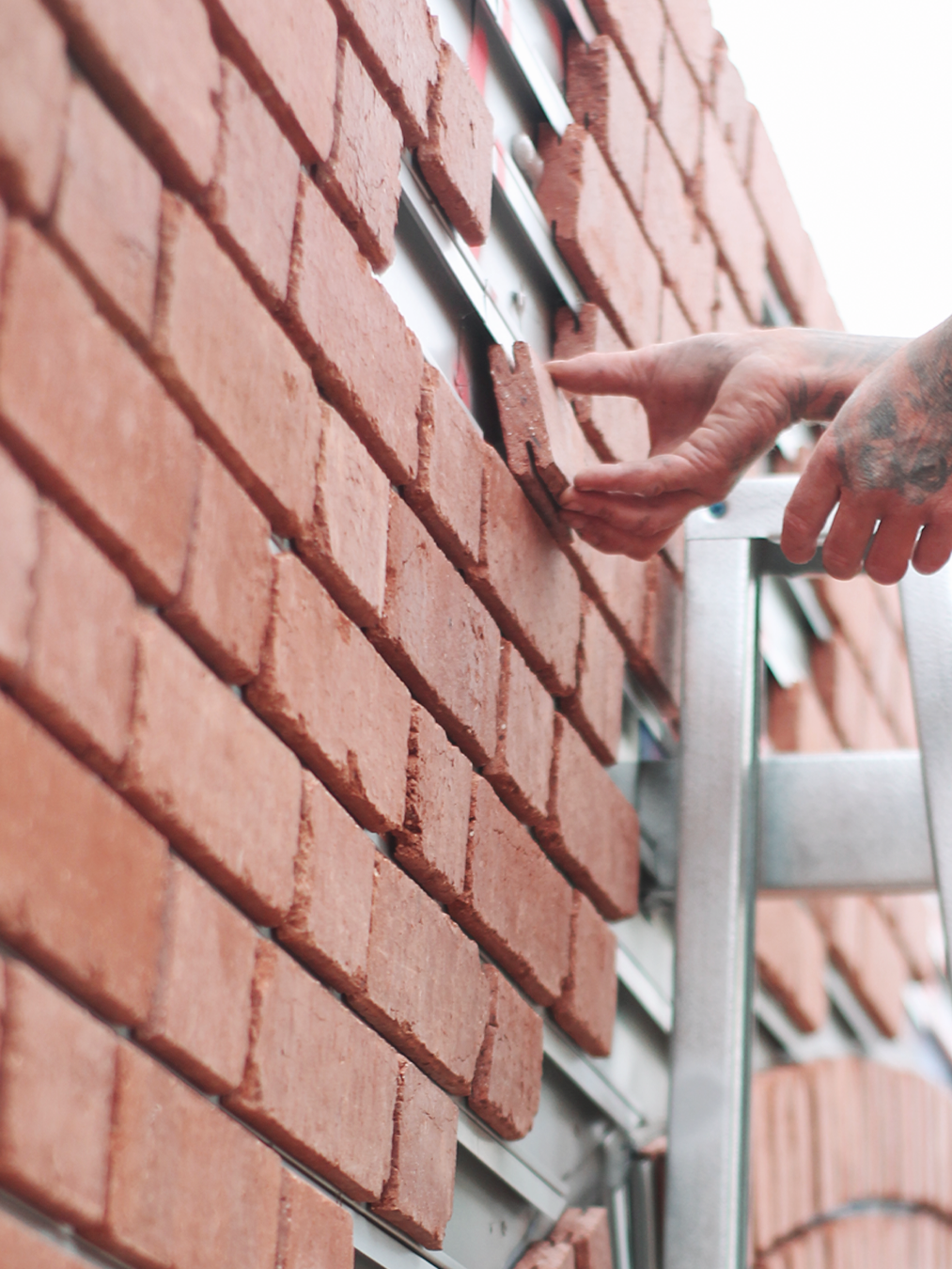
This is the part people get wrong most often: they assume a lightweight, panelised brick facade must be a plastic sheet or a printed tile standing in for the real thing. It isn't. Nexbrick starts as an actual brick, cut and processed into a facing. You're not choosing between "real brick" and "a modular system." You're choosing how the real brick you want gets fixed to the wall.
And because the system isn't tied to one manufacturer's range, you're not limited to a narrow catalogue of approved bricks. If you can source the brick, there's a very good chance it can be cut, processed, and installed as part of the facade you've actually designed, not the closest thing a supplier happens to stock.
Judge it on the whole project, not the line item
If you only compare brick-on-brick, prefab masonry can look like the more expensive option on paper. That comparison misses most of the maths. A modular install team is typically on site for about a week where traditional brickwork would need closer to two, for the same facade. Less scaffolding. Less material handling. Fewer weather delays holding up the trades behind it. Fewer problems cascading through the rest of the build because brickwork slipped.
If the same outcome gets delivered with the same team on site for less time, with fewer flow-on delays to the program, it's worth asking how that's the more expensive choice. Total project value, not the per-square-metre sticker, is the number that actually tells you what a facade costs a build.
What this means for your next facade
Modern masonry gives architects something traditional brickwork never offered: the brick they actually want, in the shapes and finishes they actually want, delivered without the feasibility and program risk that used to force compromises. We supply everything needed to get it onto the wall: cut brick, rail, adhesive, fixings, and mortar, backed by in-house design support from concept through install.
We also won't push a modular system onto a job it doesn't suit. If hand-laid brick is the right call for your project, we'll say so. But if you're designing a facade and assuming brick means slow and inflexible, it's worth a conversation before that assumption shapes the design.
Have a facade in mind and want to know what's actually possible? Get in touch and we'll walk through it.
Speak with the Modular Masonry Group team about Nexbrick for your next commercial project.